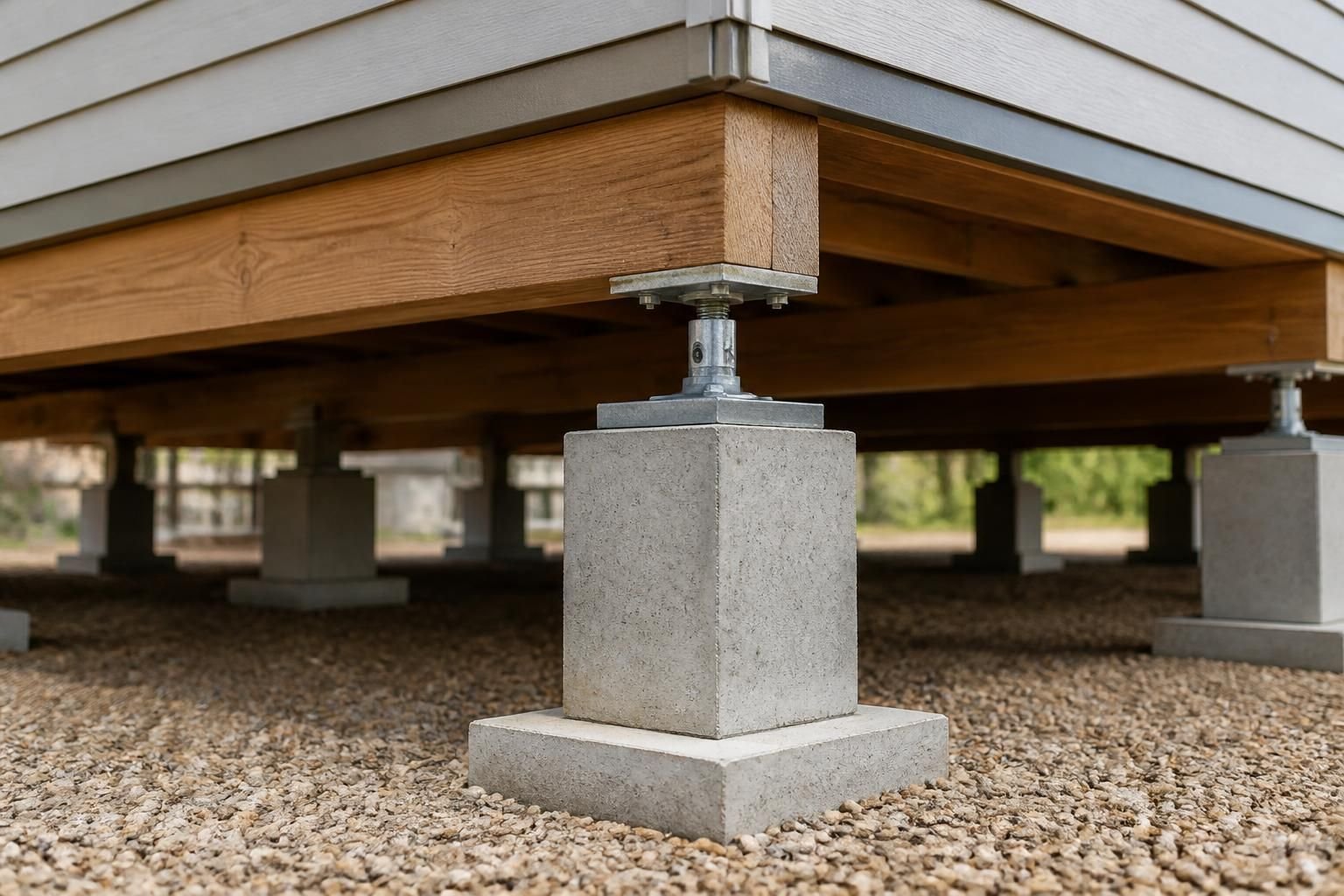
Pasadena Solid Foundation Repair repairs pier and beam foundations for homes across Pasadena, TX. Floorboards that dip, doors that catch, and cracks that keep returning often point to a pier and beam foundation problem. If your Pasadena home feels uneven or parts of the floor are starting to slope, the support system under the house may need attention before the movement spreads.
At Pasadena Solid Foundation Repair, we look at the structure beneath the symptoms, not just the surface damage. We inspect the crawl space, locate the source of settlement or moisture trouble, and recommend pier and beam foundation repair that fits the condition of the home and the soil it sits on.
Pier and beam foundations can show trouble in small ways first. Many homeowners notice changes inside before they ever look under the house. Those changes matter because shifting supports can affect framing, floors, walls, and door openings all at once.
When these signs appear together, the issue is often more than wear from age. A pier and beam system depends on stable supports, and once those supports move, the floors above them begin to show the strain.
Pasadena sits on clay-heavy soil, and that soil reacts strongly to moisture changes. When the ground expands and contracts, the support points under a pier and beam home can shift, tilt, or settle unevenly. That movement creates stress that shows up inside the house over time.
Clay soil can swell when wet and shrink when dry. That repeated change can push some supports upward while others drop, leaving the structure out of level.
Water around or under the home can weaken soil, affect wooden components, and contribute to sagging or movement in the crawl space.
Older pier and beam systems may have supports that no longer carry loads evenly. Even if the home has stood for years, gradual settling can still alter the way the structure bears weight.
Pasadena Solid Foundation Repair checks these factors together because a floor issue often starts with the ground, the drainage conditions, or the support system under the home.
Every pier and beam repair starts with a close look at the house from above and below. We want to know which areas moved, why they moved, and what must be corrected so the repair addresses the cause, not just the visible result.
We examine the floors, walls, doors, and crawl space conditions to identify where movement is happening and how far it has progressed.
We check piers, beams, and other support points for settlement, misalignment, or damage that affects load transfer.
We explain the findings clearly and outline the repair path that matches the home’s condition.
We perform the needed pier and beam foundation repair, which may include restoring support, correcting elevation issues, or addressing related crawl space concerns.
When water or drainage conditions are contributing to the problem, we identify those concerns so the repair has a stronger chance to last.
This process helps homeowners understand what is happening under the house and what each repair step is meant to solve.
Many pier and beam problems begin below the living space. The crawl space can hold clues that explain floor movement, including damp soil, weak supports, or areas where air and water conditions have been putting stress on the structure.
Persistent dampness can affect wooden members and nearby support areas. If the crawl space stays wet too often, the structure above may begin to feel softer or less stable underfoot.
Some homes settle more on one side than another. When that happens, the crawl space often shows the story through shifted supports or areas where the load is no longer spread evenly.
A crawl space allows us to see conditions that are hidden from view inside the home. That access helps us identify whether the floor issue is isolated or connected to a broader foundation concern.
If crawl space damage is part of the problem, we include that reality in the repair discussion so the homeowner gets a complete picture of the structure, not a guess based on the symptoms alone.
Homeowners usually contact us because something inside the house no longer feels right. Pier and beam foundation repair can help restore support, reduce unevenness, and make the home feel more settled again.
Not every home needs the same solution. A repair that works for one property may not fit another, especially when the soil, moisture patterns, and structure are different. That is why a detailed inspection matters before any work begins.
Pier and beam homes call for a careful eye because the visible problem is often only part of the story. In Pasadena, shifting clay soil and changing moisture levels can make floor movement more noticeable, and the signs may appear slowly enough that homeowners get used to them before the damage grows.
We work with homeowners who want a direct answer about what is happening under the house. Pasadena Solid Foundation Repair looks at the condition of the support system, the crawl space, and any related drainage or moisture concerns so the repair can address the real source of the movement.
Whether the home has a single trouble spot or unevenness across several rooms, the goal is the same: identify the reason for the shift and recommend the right pier and beam foundation repair for the structure.
If you are not sure whether the issue is serious, a few observations can help you decide how urgent the situation feels. You do not need to crawl under the house or take apart anything. Just note what has changed and where it happens.
See whether any doors rub, bind, or close differently than they used to.
Notice soft spots, dips, or slopes that make certain areas feel different.
Watch for cracks, gaps, or separations near corners and baseboards.
Any damp smell or visible crawl space moisture should be part of the inspection conversation.
These observations give us a stronger starting point and help us focus the inspection on the areas most likely to be affected.
Many of Pasadena's older homes — particularly near the Ship Channel, South Houston, Galena Park, and Jacinto City — were built on pier-and-beam foundations with a crawl space underneath. Decades of the region's clay movement, high humidity, and periodic flooding take a toll, causing beams to sag, piers to shift, and floors above to bounce or dip.
Because these homes have a crawl space, our crews access the framing directly to replace deteriorated beams and joists, add or reset support piers, and re-level the floor system. In Pasadena's damp, flood-prone setting we also watch for moisture damage and drainage issues under the home, since controlling water is key to keeping a pier-and-beam foundation stable.
Older homes across Pasadena and the channel communities often sit on pier-and-beam foundations over crawl spaces that stay damp because the water table here runs just a few feet down near the bay and Ship Channel. Combined with heavy Gulf rainfall and flat ground that drains slowly, that moisture shifts piers and rots beams. We stabilize the framing and control the moisture that Pasadena's coastal setting keeps pushing into the crawl space.
Related services include House Leveling, Slab Foundation Repair, and Crawl Space Repair.
We serve homeowners across Pasadena and nearby communities, including South Houston, Galena Park, and Jacinto City. If you are still weighing options, Foundation Repair Methods for Pasadena, TX Homes covers the background.
Floor movement paired with sticking doors, cracks, or gaps often points toward a foundation concern. A proper inspection helps separate a surface issue from a structural one.
Yes. Different support points can move at different rates when soil conditions change, which can leave one side of the home lower or less stable than another.
They do. Moisture, weak supports, and poor site conditions under the home can all affect how the structure performs above.
We look for visible movement, support problems, crawl space conditions, and patterns that show how the structure has shifted over time.
Yes, when door trouble is caused by foundation movement. Correcting the support system can reduce the shifting that affects openings and frames.
No. Small changes can signal early movement, and catching them sooner can make the repair process more manageable than waiting for larger structural strain.
If your Pasadena home is showing signs of uneven floors, crawl space trouble, or recurring cracks, Pasadena Solid Foundation Repair is ready to inspect the structure and explain the next step clearly.
Call +17139292237 to schedule your inspection.
Start with an Inspection
Tell us what you are seeing, from cracks and sticking doors to sloping floors or drainage trouble. We will inspect the property, explain what is happening, and recommend the right repair path.